Absorbent products are the most commonly used product for light bladder leakage and they work well for many women.
There are four main designs:
- Small disposable pads – Simple disposable absorbent pads worn inside close-fitting underwear. These come in a variety of sizes and absorbencies. Most have an integral waterproof backing, although un-backed pads are available that are designed to be worn inside another product that has waterproofing.
- Small washable pads - Similar to small disposable pads, but can be washed and re-used many times.
- Pull-ons – Disposable products in which close-fitting pants are combined and an absorbent pad with a waterproof backing in a single design.
- Washable pants – Washable pants with integral absorbent pad, designed to resemble regular underwear.
More detailed information about different product types and when they work best can be found by clicking on the links below. Personal preference plays an important role in choosing products. Many women prefer to use a mix of different types of products as this gives them the most flexibility to meet their individual needs.
Click on Product Selector for help choosing between the different types of pads and devices.
If you are unsure how heavily you leak and would like some help and advice, go to bladder leakage.
Small Disposable Pads
2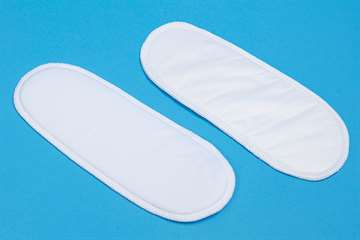
Small washable pad6
Small disposable padsThese are small, simple disposable absorbent pads worn inside close-fitting underwear. They are sometimes called insert pads, liners or shields. Many brands are designed and marketed for women, while some are unisex.
The pads are usually shaped to fit the body (although some are simply rectangular). Most have an adhesive strip on the back to help secure them to underwear. The top layer, which is in contact with the skin, is made of a non-woven material that allows urine to pass through easily to keep the skin dry. The absorbent core of the pads is made from fluffed wood pulp fibres, usually combined with superabsorbent polymer powder, which turns to gel and retains the urine in the pad. Most small absorbent pads have a waterproof outer backing.
Small disposable pads are most likely to suit you if...
- You have light bladder leakage
- You are concerned about reliably containing leakage
Small disposable pads are less likely to suit you if...
- Low cost is a priority for you
- Discretion is a priority for you
- You have bowel leakage or combined bladder and bowel leakage because they do not cover the bottom adequately
When do small disposable pads work best?
Research has shown that small disposable pads provide good absorbency and protection for women with light bladder leakage.1
It is important that they are worn in pants that will keep them securely in place against the body.
They may be less effective at absorbing leakage when in bed, because gravity may cause urine to flow away from the pad. A larger pad design that provides more coverage may be more effective.
What about fitting?
Most women find small disposable pads easy to put on and change as they just need to be inserted into close-fitting underwear.
If you do not have good use of your hands, you may find this difficult. You may also find it hard to remove the covering of the adhesive strip on the back of the pads.
Pads tend to be hard to change in a sitting position unless you can lift your bottom off the chair and move from side to side lifting one buttock off the chair at a time.
They can also be put on or changed easily by a helper. If you need a helper to change your pads, you will need to find a product that suits you and is also easy for your helper.
What other products could ‘mix and match’ well with small disposable pads?
Some women manage their bladder leakage successfully using only small disposable pads. However, others find using different product types at different times works best.2
For example, some women use disposable pads designed specifically for incontinence when they go out, but use sanitary towels, which tend to be cheaper, while they are at home.
A larger pad, pull-ups or all-in-one pad may work better than small disposable pads when in bed.
Selecting disposable pads
Disposable pads are available in a range of absorbencies. Generally, as the absorbency increases so does the size and bulkiness of the pad. Choosing which will work best for you involves finding the right balance of absorbency and discretion. It may be a good idea to start with a thinner, less absorbent pad and then increase the absorbency if necessary until you find one that works for you.
If you need help determining how light or heavy your leakage is, click here.
Women have reported considerable differences in the performance of different brands of pads.3 If one brand doesn’t suit you, it may be worth trying a different one before moving on to a different product type. Some manufacturers of disposable products will send you free samples in the post for you to try.
Look out for advertisements in magazines and on the internet.
Research has shown that more expensive brands do not always perform better than less expensive ones.4
Disadvantages of disposable pads
It can sometimes be difficult to keep a small disposable pad securely in place. Close-fitting pants with good all over elasticity will hold the pad in place more securely than standard underwear.
Some women experience chafing or rubbing from raised or elasticated parts of pads. Adhesive elements of pads can become stuck to the skin accidentally and can hurt when removed.
Some people find that they are allergic to some of the materials that disposable pads are made of and find that they have to stop using them.
Small Washable Pads
9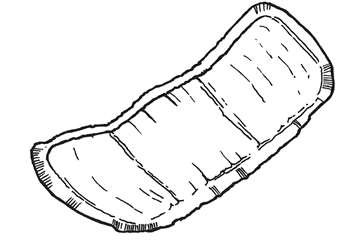
Small washable padsSmall washable pads are re-usable versions of small disposable pads.
They may be shaped or rectangular. They usually have a waterproof backing unless they are to be used in combination with other products. They are designed to be worn close to the body and secured in place by close fitting stretch pants or underwear.
Who are small washable pads good for?
Small washable pads may be useful for some women with very light bladder leakage. Although some women may find them useful in some circumstances, they perform poorly in comparison with other products for light bladder leakage.1
They are unlikely to be suitable for containing bowel leakage or combined bladder and bowel leakage because they do not cover the bottom adequately. They may, however, be used in conjunction with a separate product for bowel leakage.
When do small washable pads work best?
Small washable pads may provide adequate absorbency during the day for some women with very light bladder leakage 1, or those who experience only occasional light leakage and want some form of protection “just in case”.
They are unlikely to be effective at absorbing leakage when in bed, because gravity may cause urine to flow away from the pad. A larger pad design that provides more coverage may be more effective.
What about fitting?
Small washable pads are easy to put on or change as they are simply inserted into close-fitting underwear.
Small washable pads do not have an adhesive strip or wings, so they need be securely held in place by close-fitting underwear if they are to stay in place.
What other products could ‘mix and match’ well with small washable pads?
Many women with bladder leakage find using different product types at different times works best.2
A small washable pad might be a useful and economic product for use whilst at home, whereas other products such as disposable pads or other absorbent products may be more reliable when out or doing something more active.
Disadvantages of small washable pads
Some women have found that they are difficult to keep in position. A product which can move around is more likely to leak.
They require washing and you have to be prepared to carry wet products when out.
The layer in contact with the skin is generally made out of polyester, a material regularly used in other clothes. However like any fabric, you could have sensitivity to it.
Pull-ons - disposable pants with integral pad
4
Pull-ons - disposable pants with integral padDisposable pants for bladder leakage are an all-in-one product in which a disposable absorbent pad and disposable close-fitting pants are combined. They are sometimes called Protective Underwear or Pull-ups. They are available in a range of absorbencies, so that some are suitable for light bladder leakage.
The pants part of the product is made of a non-woven fabric and is elasticated all over to give a close fit and keep the pad in place (similar to toddler training pants/pull ups).
In recent years newer designs have been introduced to the market that more closely resemble cotton underwear with the elastication concealed within the material. Some are designed specifically for women, with “feminine” prints and detailing.
The absorbent pad part of the product is in the crotch area. The top layer of the pad, which is in contact with the skin, is made of a non-woven material that allows urine to pass through easily to keep the skin dry. The absorbent core of the pad is made from fluffed wood pulp fibres, usually combined with superabsorbent polymer powder, which turns to gel and retains the urine in the pad. The outer backing of the pad is waterproof.
Who are pull-ons good for?
These products are suitable for women with bladder leakage ranging from light to moderate.
They may also be suitable for containing some small bowel leakage or combined bladder and bowel leakage because they do cover the bottom. However, because much of the product is made of breathable non-woven fabrics they may do little to contain odour, so that another product may be more suitable.
When do pull-ons work best?
Little research has been done about how well these products perform for light bladder leakage. However, similar products for moderate to heavy incontinence perform well and are popular with the women who use them. 1
They may be less effective at absorbing leakage when in bed, because gravity may cause urine to flow away from the pad. An all-in-one diaper-style pad that provides more coverage and protection from leakage may be more effective.
What about fitting?
Disposable pants are pulled on just like your usual underwear, and so they are easy to use if you are able to dress yourself. However, changing the pants means removing outer clothing. Doing this once or twice a day may be acceptable but any more frequently might be an unacceptable inconvenience, and may be difficult when away from home.
If you are dependent on a helper for putting on and changing your pants, you might need to find a product that suits you and is also easy for your helper to change. If you can stand, even for short periods then disposable pants can be quite easily put in place by a helper. If you are lying in bed, disposable pants could be put in place by a helper if you can roll from side to side. However, every time you change the pants you would need to take outer clothing off, which may be time-consuming. Disposable pants are very hard to change in a sitting position. It might take some practice with you and your carer to get a system that works for you.
What other products could ‘mix and match’ well with pull-ons?
Many women with bladder leakage find using different product types at different times works best.2
Disposable pants are a relatively expensive product so if cost is a concern, you may not want to use them every day and if you have very light incontinence they may be an unnecessary expense.
Some women may use disposable pants when they are out and about, but simpler and cheaper pad products when at home. Some may use disposable pants during the day but an all-in-one for added protection from leaks at night.
Selecting pull-ons for light bladder leakage
Disposable pants are made in different absorbencies, the more absorbent products being more bulky.
If you have light bladder leakage it is probably best to start with the lightest absorbency available and see how it works for you.
If you need help determining how light or heavy your leakage is, click here.
Disadvantages of pull-ons
Disposable pants are a fairly expensive product, so if cost is a concern for you it may be best to consider using other products some of the time.
Some people find that they are allergic to some of the materials that disposable pants are made of and find that they have to stop using them.
Washable Pants
[image:24:Washable pants]
Washable pants are designed to look similar to normal underwear but have a built in absorbent pad.
They are available in a range of colours and designs including high/low waist, bikini, and thongs; some have lace panels.
Who are washable pants good for?
Small washable pads may be useful for some women with very light bladder leakage.
Women tend to either like them a lot or strongly dislike them.5 They are good at staying in place and are a relatively discreet product, and so are most popular for men with light leakage who are particularly active.
If you like the idea of washable products and have light bladder leakage then washable pants might be worth trying. Although the initial purchase can be expensive, if they work well for you then they become cost effective as the cost per use reduces over time the more they are used.
They are unlikely to be suitable for women who experience bowel leakage or combined bladder and bowel leakage.
When do washable pants work best?
Washable pants may provide adequate absorbency during the day for some women with very light bladder leakage 1, or those who experience only occasional light leakage and want some form of protection “just in case”.
They may not be effective at absorbing leakage when in bed, because gravity may cause urine to flow away from the pad. A larger pad design may be more effective.
What about fitting?
Washable pants are put on just like your usual underwear. This means removing outer clothing. Doing this once or twice a day may be acceptable but any more frequently might be an unacceptable inconvenience.
If you are dependent on a helper for putting on and changing your pants, you might need to find a product that suits you and is also easy for your helper to change. If you can stand, even for short periods then washable pants can be quite easily put in place by a helper. If you are lying in bed, washable pants could be put in place by a helper if you can roll from side to side. However, every time you change the pants you would need to take outer clothing off, which may be time-consuming. Washable pants are very hard to change in a sitting position. It might take some practice with you and your carer to get a system that works for you.
What other products could ‘mix and match’ well with washable pants?
Many women with bladder leakage find using different product types at different times works best.2
You might consider using disposable pads when you are going out and washable pants when you are at home or doing a particular activity. This way you may get the benefits of both designs when you need it with minimum additional laundry and maximum cost effectiveness.
It is possible to use a small disposable liner with these pants which may provide additional absorbency.
Selecting washable pants
As washable products generally do not perform as well as disposable products in terms of containing leakage, it is probably sensible to buy the most absorbent product.
Remember that the absorbent capacity stated by the manufacturer will probably be a measurement of maximum capacity in laboratory testing and this may be far higher than the amount that the product will hold in use.
If you need help determining how light or heavy your leakage is, click here.
.
It is important to ensure a good close fit to give the product the best chance of working. Take your waist / hip measurement accurately to ensure a good close fit.
Pants are often available in different designs and the size and absorbency of the pad part might be different depending on the design you choose. If one design doesn’t suit you, it may be worth trying a different one before moving onto a different product type.
Disadvantages of washable pants
Washable pants do not perform as well at containing leakage as disposable pads for light incontinence so there is a high risk of leakage.
The cover stock material is generally made out of polyester, a material regularly used in other clothes. However, like any fabric you could have sensitivity to it.
These products have to be washed and reused so are only suitable if you are happy to do this. A washing machine is best as they have a tendency to discolour after regular hand-washing.